> For the complete documentation index, see [llms.txt](https://docs.fireboom.io/llms.txt). Markdown versions of documentation pages are available by appending `.md` to page URLs; this page is available as [Markdown](https://docs.fireboom.io/v1.0/jin-jie-gou-zi-ji-zhi/gou-zi-ji-zhi.md).
# 钩子概览
本章将介绍,如何使用飞布的钩子机制扩展API,实现自定义逻辑。
> 在编程中,钩子(hooks)是一种机制,允许您在程序执行特定操作时插入代码,以更改或扩展程序的行为。钩子通常用于在不修改程序源代码的情况下对程序进行自定义,或对程序进行调试或监控。
飞布提供了各种类型的钩子,包括API请求生命周期的钩子、授权生命周期的钩子、文件上传生命周期的钩子,用于扩展逻辑。
钩子本质上是http请求生命周期的“切面”,在请求经过“切面”时,通过自定义函数,修改请求的输入参数和响应结果。
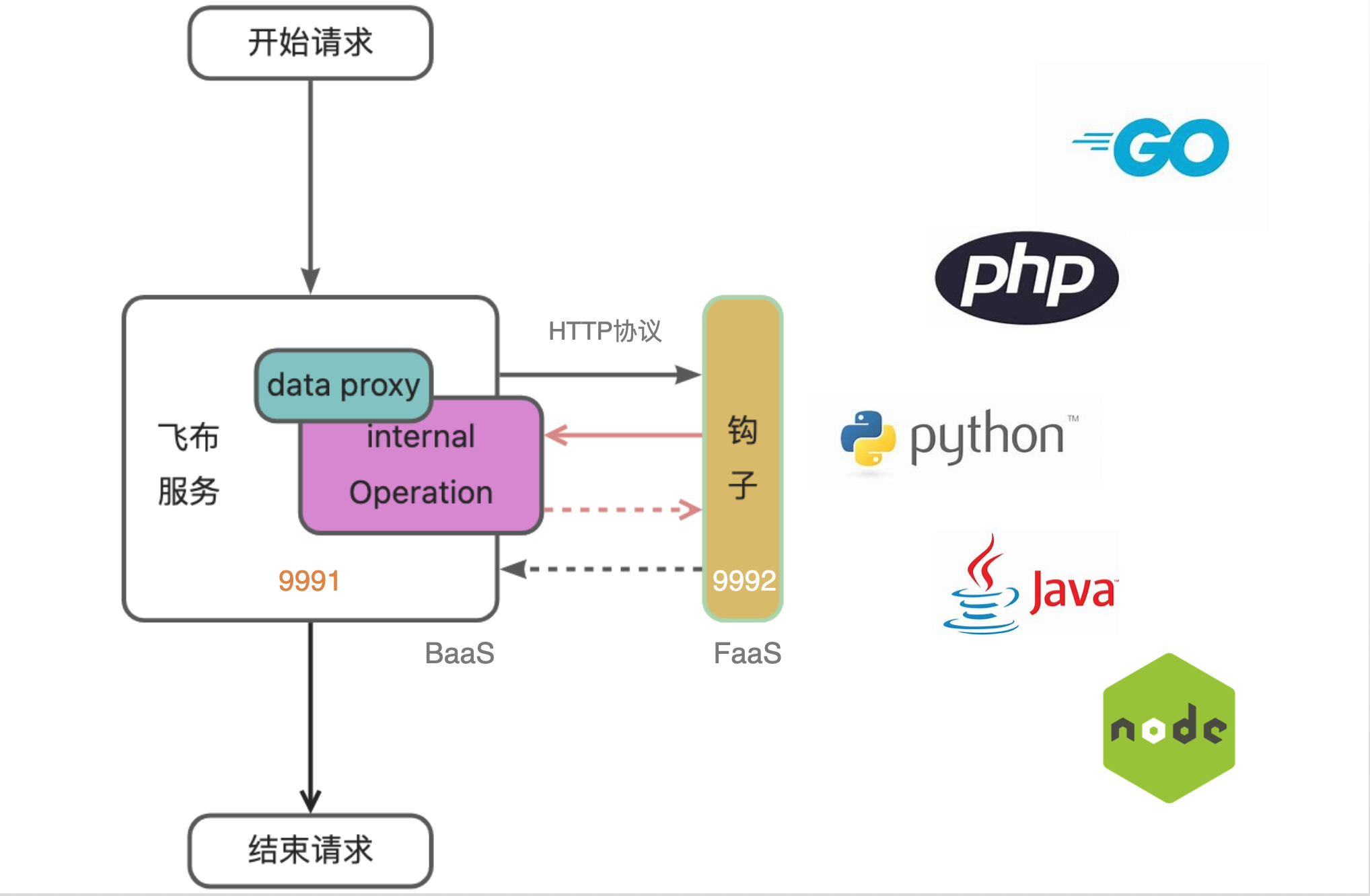
飞布服务与钩子服务相互独立,服务间通过HTTP协议通讯,可分别部署。钩子服务本质上是一个实现了飞布钩子规范的WEB服务。因此,可以用任意后端开发语言实现钩子,真正做到多语言兼容。
飞布服务与钩子服务调用关系
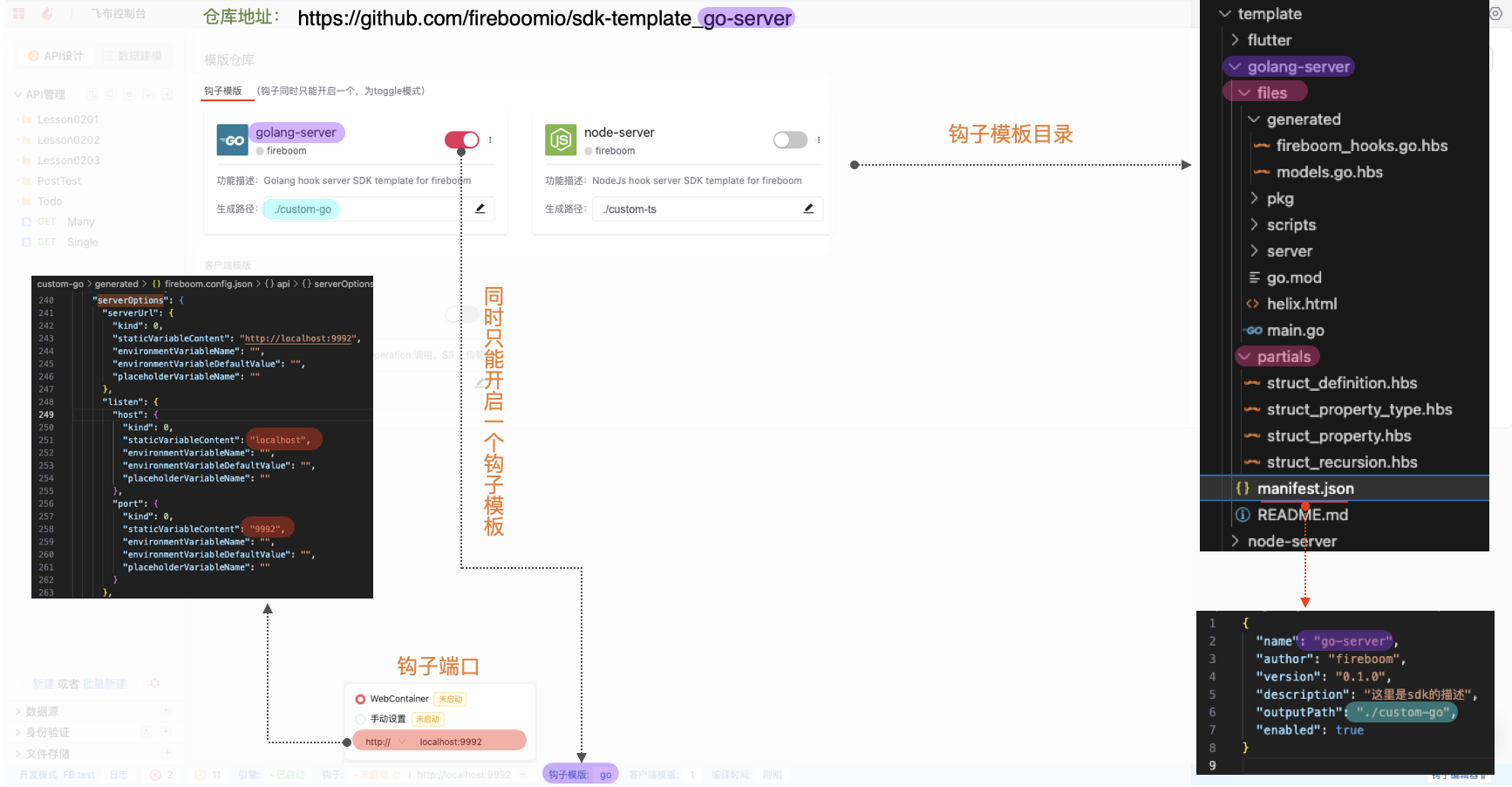
钩子模板 ”,默认为空。点击后,可打开模板页,默认为空。点击右上角“浏览模板市场”,打开模板下载页,里面展示了两种类型的模板:
* 钩子模板,用于生成钩子服务的脚手架
* 客户端模板,用于生成客户端的SDK,详情见 [客户端SDK](/v1.0/shi-yong-bu-shu-shang-xian/sdk-sheng-cheng.md)
今天我们只介绍钩子模板。我们以golang钩子模板为例。
* V2.0版本:
不同Fireboom版本,下载模板的分支不同!
1.2 下载后,将在 `template` 目录下增加 `golang_server` 目录,包含有4部分:
* README.md:自述文件
* manifest.json:清单配置,存储了该模板的基本信息,和界面一一对应
```json
{
"name": "go-server",
"author": "fireboom",
"version": "0.1.0",
"description": "这里是sdk的描述",
"outputPath": "./custom-go",// 控制目标文件的生成路径,相对Fireboom根目录
"enabled": false // 默认是关闭的
}
```
* files:模板文件
* .hbs:[handlerbars](https://www.handlebarsjs.cn/)格式,每次编译后替换目标文件
* 其他文件,例如`.go`、`.html`,目标文件不存在时,生成(否则不生成)
* partials(可选):每个文件都是一个模板片段,主要用于复用逻辑,可被files的hbs中引用
{% tabs %}
{% tab title="golang" %}
```
template
├─ golang-server
│ ├─ README.md
│ ├─ files
│ │ ├─ generated
│ │ │ └─ models.go.hbs
│ │ ├─ go.mod
│ │ ├─ helix.html
│ │ ├─ main.go
│ │ ├─ pkg
│ │ │ ├─ base
│ │ │ │ ├─ client.go
│ │ │ │ ├─ operation.go
│ │ │ │ ├─ request.go
│ │ │ │ ├─ upload.go
│ │ │ │ └─ user.go
│ │ │ ├─ consts
│ │ │ │ └─ env.go
│ │ │ ├─ plugins
│ │ │ │ ├─ graphqls.go
│ │ │ │ └─ internal_request.go
│ │ │ ├─ types
│ │ │ │ ├─ configure.go
│ │ │ │ └─ server.go
│ │ │ ├─ utils
│ │ │ │ ├─ config.go
│ │ │ │ ├─ file.go
│ │ │ │ ├─ http.go
│ │ │ │ ├─ random.go
│ │ │ │ └─ strings.go
│ │ │ └─ wgpb
│ │ │ └─ wundernode_config.pb.go
│ │ ├─ scripts
│ │ │ ├─ install.sh
│ │ │ ├─ run-build.sh
│ │ │ ├─ run-dev.sh
│ │ │ └─ run-prod.sh
│ │ └─ server
│ │ ├─ fireboom_server.go.hbs # 入口文件模板
│ │ └─ start.go
│ └─ manifest.json
```
{% endtab %}
{% tab title="nodejs" %}
```
template
├─ node-server
│ ├─ README.md
│ ├─ files
│ │ ├─ ecosystem.config.js
│ │ ├─ fireboom.server.ts.hbs
│ │ ├─ generated
│ │ │ ├─ claims.ts.hbs
│ │ │ ├─ client.legacy.ts.hbs
│ │ │ ├─ client.ts.hbs
│ │ │ ├─ fireboom.factory.ts
│ │ │ ├─ fireboom.internal.client.ts.hbs
│ │ │ ├─ fireboom.internal.operations.client.ts.hbs
│ │ │ ├─ fireboom.operations.ts.hbs
│ │ │ ├─ fireboom.server.ts.hbs
│ │ │ ├─ linkbuilder.ts.hbs
│ │ │ ├─ models.ts.hbs
│ │ │ ├─ prisma.ts.hbs
│ │ │ └─ testing.ts.hbs
│ │ ├─ nodemon.json
│ │ ├─ operations.tsconfig.json
│ │ ├─ package.json
│ │ ├─ scripts
│ │ │ ├─ buildOperations.ts
│ │ │ ├─ install.sh
│ │ │ ├─ run-build.sh
│ │ │ ├─ run-dev.sh
│ │ │ └─ run-prod.sh
│ │ └─ tsconfig.json
│ ├─ manifest.json
│ └─ partials
│ ├─ operation_partial.hbs
│ └─ schema_partial.hbs
```
{% endtab %}
{% endtabs %}
2,在模板页修改“生成路径”,并开启钩子开关(钩子模板同时只能开启1个)
3,后续每次触发“编译”,都会重新生成钩子文件(非 `.hbs` 文件,只生成1次 )
{% tabs %}
{% tab title="golang" %}
```
├─ custom-go
│ ├─ go.mod
│ ├─ go.sum
│ ├─ helix.html
│ ├─ main.go
│ ├─ pkg
│ │ ├─ base
│ │ │ ├─ client.go
│ │ │ ├─ operation.go
│ │ │ ├─ request.go
│ │ │ ├─ upload.go
│ │ │ └─ user.go
│ │ ├─ consts
│ │ │ └─ env.go
│ │ ├─ plugins
│ │ │ ├─ auth_hooks.go
│ │ │ ├─ global_hooks.go
│ │ │ ├─ graphqls.go
│ │ │ ├─ internal_request.go
│ │ │ ├─ operation_hooks.go
│ │ │ ├─ proxy_hooks.go
│ │ │ └─ upload_hooks.go
│ │ ├─ types
│ │ │ ├─ configure.go
│ │ │ └─ server.go
│ │ ├─ utils
│ │ │ ├─ config.go
│ │ │ ├─ file.go
│ │ │ ├─ http.go
│ │ │ ├─ random.go
│ │ │ └─ strings.go
│ │ └─ wgpb
│ │ └─ wundernode_config.pb.go
│ ├─ scripts
│ │ ├─ install.sh
│ │ ├─ run-build.sh
│ │ ├─ run-dev.sh
│ │ └─ run-prod.sh
│ ├─ server
│ │ └─ start.go
│ │ └─ fireboom_server.go # 生成的入口文件(重要!!!)
```
{% endtab %}
{% tab title="nodejs" %}
```
todo
```
{% endtab %}
{% endtabs %}
4,按照各语言的方法安装依赖,并启动钩子服务即可
钩子服务本质上是web服务,该服务会按照钩子规范注册对应路由,我们只需要在路由的控制器中完善业务逻辑即可,详情见 [启动钩子](/v1.0/jin-jie-gou-zi-ji-zhi/qi-dong-gou-zi.md)
## 升级钩子
接着,基于上述原理 ,学习如何升级模板。
1,在模板页选择 `golang-server` ,点击“...”,选择“升级”
Fireboom将重新从对应仓库下载模板,并覆盖旧模板
2,前往钩子生成目录,手工删除钩子模板目录下files目录中后缀不是`.hbs`的文件
```
├─ custom-go
│ ├─ go.mod
│ ├─ go.sum
│ ├─ helix.html
│ ├─ main.go
│ ├─ pkg //通常情况下,删除目标目录下的该文件就成,因为升级一般都是修改该目录
│ ├─ server
│ │ └─ start.go
```
3,重装依赖,启动钩子服务